
Conference 2026
Friday, 16 October 2026
UWA Business School, The University of Western Australia
About Themes Program Abstracts Speakers Projects Map Information
Friday, 16 October 2026
UWA Business School, The University of Western Australia
About Themes Program Abstracts Speakers Projects Map InformationThe Centre for Business Data Analytics (CBDA) at The University of Western Australia (UWA) Business School invites academics, industry practitioners, educators and final-year Master of Business Analytics students to participate in the CBDA Conference 2026 to be held on Friday, 16 October 2026 at the UWA Business School of the University of Western Australia's Crawley campus.
The conference will showcase emerging research and practical applications across data analytics, artificial intelligence, machine learning, information systems, advanced modelling and supply chain management. The program includes academic and industry presentations, research-in-progress, completed studies, student presentations and an interactive poster session.
The event provides an opportunity to discover new work, exchange perspectives, build connections between academia and industry, and explore how advanced analytical methods are being applied to real-world challenges.
Networking session sponsored by CBDA Industry Partner, Ferngrove Winery

Nestled in the distant Frankland River region of the Great Southern in Western Australia, our home is one of the world's most isolated, and purest environments. Our terroir, soil, and climate are one-of-a-kind, and every experience here is are - from the extraordinary majesty of the open sky to endless vistas. Our wine, born from the distinctive character of our land, is perhaps the rarest experience of them all.
Data analytics, artificial intelligence and machine learning.
Information systems and digital transformation.
Advanced modelling and decision support.
Supply chain management and sustainability.
Additional topics include big data analytics, business intelligence, digital strategy, cybersecurity, sustainable supply chains, and data-driven decision-making. Please get in touch with us if you are interested but unsure of whether your work is a good fit!
The proposed conference program for Friday 16 October is as follows:
| Time | Session | Venue |
|---|---|---|
| 9:00 am - 10:00 am | MBILM Capstone 2 Presentations & Doctoral Student Session | Room G02 |
| 10:00 am - 10:30 am | Morning Tea | MBA Quarter |
| 10:30 am - 12:00 pm | Academic Paper Presentations | Rooms 164 / 242 |
| 10:30 am | Dai Yao Staying or Quitting: The Economics of Stop Decisions in Taxi, Live Streaming and Shopping |
Room 164 |
| 10:30 am | Garima Where You Farm Matters: Simulation Analytics of Regional Cost Incidence in an Export Grain Supply Chain |
Room 242 |
| 10:48 am | Brett Smith Advancing Methods for Prototype Studies: Application to Understanding Trust in Autonomous Driving |
Room 164 |
| 10:48 am | Kieron Hendicott From Project Assurance to Capital Risk Intelligence |
Room 242 |
| 11:06 am | Reza Kiani Mavi Analysing Eco-Innovation Efficiency in OECD Countries Using the Malmquist Productivity Index |
Room 164 |
| 11:06 am | Doina Olaru Trip Chain Complexity: A Cross-National Time-Use Analysis of Daily Mobility Patterns |
Room 242 |
| 11:24 am | Shujie Luan AI Model Design and Physician Liability |
Room 164 |
| 11:24 am | Tristan Reed Evaluating the Impacts of Active Travel Infrastructure: A Mixed-Method Approach from Perth's Boorloo Bridge |
Room 242 |
| 11:42 am | Priscilla Leung From Unstructured Text to Event Logs: A Privacy-Preserving LLM Approach for Process Mining |
Room 164 |
| 11:42 am | Kevin Wei-Ting Hong Expert-AI Collaboration Using Advanced Prompt Engineering Techniques: A Case Study of Construction Safety Analysis |
Room 242 |
| 12:00 pm - 1:00 pm | Industry Panel: AI and Data |
Wesfarmers LT |
| Panellists: Lincoln Pan, Ron Forlee and Srinivas Boyapati, Facilitator: Vidy Potdar | ||
| 1:00 pm - 2:00 pm | Lunch | MBA Quarter |
| 2:00 pm - 2:45 pm | Keynote Address: Natalia Kacperek |
Wesfarmers LT |
| People WA - Accessing the power of data | ||
| 2:45 pm - 3:00 pm | Afternoon Tea | MBA Quarter |
| 3:00 pm - 5:00 pm | Student Team Presentations | Wesfarmers LT |
| 3:00 pm | SAS Research Technology | Wesfarmers LT |
| 3:15 pm | KAUST / Pelican Technologies | Wesfarmers LT |
| 3:30 pm | HireMii | Wesfarmers LT |
| 3:45 pm | BGCCI | Wesfarmers LT |
| 4:00 pm | Mercurian Equity | Wesfarmers LT |
| 4:15 pm | ESG Matters | Wesfarmers LT |
| 4:30 pm | RiseX | Wesfarmers LT |
| 4:45 pm | Business News | Wesfarmers LT |
| 5:00 pm - 7:00 pm | Networking Session and HDR Poster Competition | Foyer |
| 5:00 pm | Networking and Poster Judging | Foyer |
| 6:00 pm | Poster Vote Tally and Announcement of Winner | Foyer |
Staying or Quitting: The Economics of Stop Decisions in Taxi, Live Streaming, and Shopping
Dai Yao, The Hong Kong Polytechnic University
Why do workers keep driving, viewers keep watching, and shoppers keep walking? When does each of them stop? This talk presents stop and exit decisions of market participants in a single framework. Each exit, whether a driver ending a shift, a viewer closing a stream, or a shopper leaving a mall, is a stopping decision shaped by a specific state. Four states organise the evidence, from taxi shifts to mall visits. Income targets govern taxi drivers' shift exits, with evidence from Duong et al. (MNSC 2023). Visible peer payments govern viewer exit, and when platforms deploy synthetic accounts that mimic generosity, incumbent customers are not fooled and disengage, the finding of Yao et al. (POMS 2025). Belief dynamics and suspense retain streamers on the supply side. Remaining options discipline mall shoppers across 24.8 million store visits. Platforms and managers can shape participation through transparency, disclosure, and menu design.
Advancing Methods for Prototype Studies: Application to Understanding Trust in Autonomous Driving
Brett Smith, UWA Business School, The University of Western Australia
Prototype analysis seeks to identify central features of complex constructs through their effects on judgement, response time, and memory, yet standard approaches often rely on ratings, mean response times, and recall frequencies. We recast prototype analysis studies within a choice-modelling framework, applying best-worst scaling and drift-diffusion models (closely related to decision field theory) to obtain behaviourally consistent measures of prototypicality.
Analysing Eco-Innovation Efficiency in OECD Countries Using the Malmquist Productivity Index
Reza Kiani Mavi, School of Business and Law, Edith Cowan University. Joint work with Neda Kiani Mavi (School of Business and Law, Edith Cowan University)
Eco-innovation is central to sustainable development, yet little is known about how systemic shocks such as COVID-19 affect the efficiency of national eco-innovation systems. This study evaluates eco-innovation efficiency and productivity across OECD countries over 2018-2022, covering pre- and post-pandemic periods. Using Data Envelopment Analysis (DEA) and the Malmquist Productivity Index (MPI), we assess how efficiently countries convert energy use, labour, and R&D expenditure into GDP, renewable electricity, and high-technology exports while constraining greenhouse gas emissions. Average productivity rose over the period, with substantial cross-country variation. Post-COVID productivity growth was driven predominantly by technological change rather than technical efficiency, indicating that the crisis was associated with frontier shifts rather than incremental efficiency gains. Frontier economies remained stable, whereas structurally weaker systems experienced greater volatility. Long-term eco-innovation performance therefore depends primarily on structural technological upgrading and innovation capacity rather than short-term resource optimisation.
AI Model Design and Physician Liability
Shujie Luan, UWA Business School, The University of Western Australia. Joint work with Shubhranshu Singh (Johns Hopkins University), Tinglong Dai (Johns Hopkins University). Forthcoming in Management Science.
With the growing use of artificial intelligence (AI) in clinical decision-making, concerns about algorithmic disparity have intensified. In response, the U.S. Centers for Medicare and Medicaid Services (CMS) has introduced a liability rule that penalises healthcare providers whose reliance on disparate algorithms contributes to erroneous clinical decisions. We examine how such liability considerations reshape (i) an AI firm's algorithm design decisions and (ii) a physician's decisions to use AI in healthcare delivery. The AI firm designs an algorithm for two patient groups, where improving accuracy for the disadvantaged group is more costly. The physician then decides whether to consult AI, weighing the reduction in clinical uncertainty against expected liability exposure. We find the liability rule can induce disparate use of AI: the physician may reduce AI use overall and rely on AI less for disadvantaged patients. This effect is non-monotone: as liability increases, the physician's use of AI for disadvantaged patients first declines, but then rises because the firm reallocates investment toward reducing disparity or switches to an equal-accuracy design. Finally, mandating equal algorithmic accuracy across patient groups can inadvertently harm both groups, because a one-size-fits-all accuracy requirement can distort the firm's investment incentives and the physician's equilibrium AI-use decisions.
From Unstructured Text to Event Logs: A Privacy-Preserving LLM Approach for Process Mining
Priscilla Leung, UWA Business School, The University of Western Australia. Joint work with Michael Flynn (Keystone Intelligence), Wei-Ting Hong (UWA Business School)
Process mining relies on structured event logs, yet many organisations record operational events in unstructured text, leaving process behaviour invisible. Large language models (LLMs) extract events more accurately than heuristic natural language processing (NLP), but their non-deterministic outputs are harder to trace. Moreover, although LLMs have been applied to confidential industrial text, they have not been compared with heuristic NLP in such settings. This design science study asks how reliable, traceable event logs can be extracted from such text. Using an industry partner's records, we develop a privacy-preserving artefact combining de-identification, topic-based vocabulary discovery and expert curation to ground LLM extraction, evaluated against a heuristic NLP baseline. We expect grounding to improve accuracy and traceability. The study contributes design knowledge for trustworthy LLM-based extraction and enables organisations to securely reveal process behaviour.
Where You Farm Matters: Simulation Analytics of Regional Cost Incidence in an Export Grain Supply Chain
Garima, UWA Business School, The University of Western Australia. Joint work with Doina Olaru, Brett Smith (UWA Business School), Kadambot H.M. Siddique (The UWA Institute of Agriculture)
Western Australia moves 20 million tonnes of export grain each harvest, yet the regional incidence of logistics costs is unmeasured. We use GSC-WA, an agent-based model in which growers make delivery, storage and fleet decisions using rules from interviews and a grower survey. The calibrated model reproduces observed production, the rail-road split and port export timelines. A global sensitivity analysis separates the effects of location, farm scale and infrastructure. Costs rise with road haul distance. They are highest in catchments where growers truck grain furthest and depend most on road-only receival sites, which also carry the highest idle fleet costs and the greatest exposure to weather. Small farms bear the highest idle costs per tonne. In large harvests, growers' cartage costs rise sharply while system cost per tonne barely changes, because growers pay per truck per day. Rail service frequency is the most effective lever, but port capacity limits its benefit. Rail and receival network decisions should therefore be assessed for their regional effects.
From Project Assurance to Capital Risk Intelligence
Kieron Hendicott, Eastpoint Advisory
Public infrastructure investment is expanding rapidly, increasing the demand for evidence-driven, user-friendly assurance before major capital investments are made. However, existing assurance processes remain mostly manual and dependent on experts' judgement, limiting large-scale evidence and institutional learning across projects. This research proposes RiskPulse, an AI-augmented approach to transforming project assurance into portfolio-wide capital risk intelligence, triangulating business-case evidence against jurisdictional assurance frameworks, benchmarks and research literature using retrieval-augmented generation (RAG)-based large language model (LLM)-enabled reasoning. It produces semi-automated, practical and auditable diagnostics, including ranked material risks, severity and confidence assessments, framework mappings, mitigation actions and project readiness indicators. Preliminary proof-of-concept testing demonstrated substantial thematic convergence in identifying demand, benefit, cost, governance and delivery risks. The proposed research programme focuses on systematic validation through expert-in-the-loop validation, examining agreement with expert panels, reviewer consistency and jurisdiction-specific calibration. The study contributes an AI-driven infrastructure decision-making framework for augmenting expert assurance and demonstrates how AI-enabled structured reasoning could support cross-project learning, portfolio-level risk comparison and earlier identification of emerging infrastructure delivery risks.
Trip Chain Complexity: A Cross-National Time-Use Analysis of Daily Mobility Patterns
Doina Olaru, UWA Business School, The University of Western Australia. Joint work with Jonathan Gershuny (University College London)
Daily travel links work, care, leisure, and household activities, yet comparative transport studies often treat trips as isolated events. Using harmonised time-use diaries from eight European countries and the USA, we examine how gender, transport mode, accessibility, and national context shape daily mobility. We analyse trip-chain structural complexity and temporal organisation using 24-hour activity diaries and indicators including trip counts, stops, temporal dispersion, activity fragmentation, and chaining intensity. Results show common patterns and marked contextual differences. Women have more complex, fragmented chains, reflecting combined employment, household, and caring responsibilities. Car travel supports more complex, spatially dispersed chains, whereas public and active transport align with more structured routines. Accessibility and national institutions also influence chaining and activity timing. The study advances comparative transport research, activity-based modelling, and debates on gender, accessibility, and sustainable mobility transitions.
Evaluating the Impacts of Active Transport Infrastructure: A Mixed-Method Approach from Perth's Boorloo Bridge
Tristan Reed, UWA Business School, The University of Western Australia. Joint work with Doina Olaru, Brett Smith, Ronnie Das and Miguel Loyola (UWA Business School)
Opened in December 2024, Perth's Boorloo Bridge represents a major active transport investment intended to reshape travel behaviour, enhance place experience and increase local activity. To assess its success beyond traditional usage metrics, this study employs a place-based, mixed-method evaluation framework. The methodology integrates qualitative and quantitative data to capture the behaviours and perceptions of bridge users, as well as those who live and work near the bridge. Primary data collection occurred in two waves, during Spring 2025 and Autumn 2026, through three tailored strategies: intercept surveys of bridge users, an online survey of local households and in-person interviews with nearby businesses. Core questions were embedded across all three to enable comparisons. These primary data were then augmented with qualitative insights from a focus group of government stakeholders and secondary quantitative metrics, including usage counts and video footage, ultimately providing a robust and holistic assessment of the new bridge's impact.
Expert-AI Collaboration Using Advanced Prompt Engineering Techniques: A Case Study of Construction Safety Analysis
Kevin Wei-Ting Hong, UWA Business School, The University of Western Australia. Joint work with Jin Xue (School of Project Management, The University of Sydney)
Artificial intelligence (AI) is increasingly being integrated into construction safety management. Current challenges include unclear AI-enhanced decision-making processes, difficulties in reconciling AI recommendations with expert judgement, and limited frameworks for integrating AI outputs with domain knowledge. To address these gaps, this study develops construction safety AI models to support recommendation analysis from both macro- and micro-level perspectives. The models were validated using construction incident reports published by SafeWork NSW between 2018 and 2024. The findings reveal complementary reasoning patterns between experts and AI. Experts predominantly provide precise, operational recommendations addressing immediate safety concerns through case-based reasoning, whereas AI models draw on broader evidence to identify higher-level safety management strategies. Building on these complementary strengths, this study proposes a managerial expert-AI collaboration framework that integrates AI-supported analysis into construction incident investigation and recommendation development, demonstrating how expert judgement and AI-generated insights can be systematically combined to support construction safety decision-making.
Lincoln Pan
Lincoln Pan (CEO, Mercurian Equity). Strategic entrepreneur & financial expert serving family offices, high-net-worth individuals, and sophisticated investors. With 15+ years of experience in business growth, investment structuring, and advanced financial operations, Lincoln helps leaders scale, optimize cash flow, and build lasting businesses across complex financial landscapes. With an extensive business network and a proven track record in managing high-complexity operations across diverse market conditions, Lincoln brings a unique blend of financial expertise and entrepreneurial insight. Passionate about entrepreneurship and strategic wealth-building, Lincoln thrives on connecting with like-minded business owners to cultivate meaningful relationships and drive sustainable success.
Ron Forlee
Ron Forlee (B.Arch, MIA, ISAA; Architect, Property Developer, Author and AI Strategist; Founder & Principal, Acuity AI Advisors; Founder, PolyGroup). Ron Forlee advises boards, founders and executive teams on AI governance, digital transformation and strategic AI adoption within the built environment and regulated industries. With over 45 years' experience spanning architecture, property development and real estate investment, Ron brings a rate combination of commercial acumen, project delivery experience and governance oversight. Through his advisory work, writing and platform development, Ron's focus is on helping organisations adopt AI responsibly, practically and with clear commercial purpose.
Srinivas Boyapati
Srinivas Boyapati (Managing Director, Natsoft Consulting and Co-Founder, Daily Drop - a pre-order meal delivery platform powered by approved restaurant partners). With over three decades in Information Technology, Operations Technology and Process Automation, he has led large-scale digital transformation programs using Industrial IoT, Blockchain, Robotic Process Automation, Big Data and AI. He is also part of the Instant Polls management team. Passionate about using technology to solve real-world problems, he brings a practical, industry perspective on how AI is reshaping business and society.
Natalia Kacperek
Natalia Kacperek is the Chief Data Officer at the Department of the Premier and Cabinet and the Chair of WA Government's AI Advisory Board. Prior to this, she drove the strategic use of information throughout a number of public sector roles in policy, strategy and analytics. Natalia has delivered Privacy and Responsible Information Sharing Legislation, implemented the WA Government AI Policy and Framework, and established PeopleWA, an asset which links data from a number of social services agencies to improve government policy, decision making and research. She is currently establishing the WA Government AI Centre of Excellence. Natalia is passionate about using data to address complex social, health, environmental and economic issues. Natalia has a Master in Statistical Data Analysis, and a Bachelor of Public Health from the University of Western Australia.
SAS Research Technology
SAS Research Technology has developed a multi-engine analytical platform, Southern Cross Verum, that uses 19 specialized engines (LLMs) trained on stock market and financial data to provide reliable answers with citations. The uniqueness of Verum is that it can adapt to any industry, unlike the one-size-fits-all nature of general-purpose AI. It uses traceable calculations, specialist analytical engines, and reference guardrails. This project set out to answer one central question: do specialist engines give more accurate answers than general-purpose AI? To evaluate the performance of our client's multi-LLM intelligence platform, we have tested Verum and Microsoft Copilot on more than 500 benchmark questions and evaluated the results against specific verification criteria. This analysis has shaped the recommendation of human-verified testing, a system health screener, and automated flagging for integrity checks. The recommendations and results of this project provide directional evidence for more rigorous testing to improve the Verum platform.
KAUST / Pelican Technologies
The global maritime shipping industry aims to reach net-zero emissions by around 2050. The team built a systems dynamic simulation model that forecasts the world fleet's fuel mix and emissions from present day to 2050, across five alternative fuels and two carbon reduction technologies. The simulation estimated the impact across four future economic scenarios based on key decisions made by independent stakeholders regarding their shipping fleet portfolio. Additionally, the team-built a dashboard that lets users test each technology against the International Maritime Organisations (IMO) official targets. The finding shows that the IMOs published targets are highly optimistic and unlikely to be met under reasonable assumptions. The primary constraint to meeting the IMO targets are the availability of clean fuels in sufficient quantity to meet the demand for future shipping fleet clean fuel designs.
Hiremii
The Hiremii project focused on predicting candidate tenure to enhance the effectiveness of Hiremii's existing recruitment algorithm. By predicting how long a candidate is likely to remain with a company, recruiters can make more informed hiring decisions and identify candidates who are not only a good fit for the role but are also likely to stay for the expected duration. This approach aims to help businesses reduce employee turnover, minimise the costs and administrative burden associated with frequent recruitment, and improve long-term hiring outcomes using data driven processes.
BGCCI
Regional cities compete for attention, money and support from the state government. But their case is often based on general knowledge and personal contacts, not on facts that can be compared. Our client is the Bunbury Geographe Chamber of Commerce and Industry (BGCCI). It faces this problem because Western Australia's Seven Cities Strategy puts Bunbury next to Albany, Broome, Geraldton, Kalgoorlie, Karratha and Port Hedland. An earlier UWA student team built a workforce dashboard from Census data for Bunbury and the Southwest. But it could not show how Bunbury compares with the other six cities. Our project asked one main question: how does Bunbury compare with the other Seven Cities on population, workforce and the economy, and can that comparison be kept up to date? To answer it, we checked the 2016 and 2021 Census data on workers (the Working Population Profile) and on residents (the General Community Profile). We built a data process in KNIME that can be repeated. We also grew the dashboard into a comparison of all seven cities, with extra data and a rough estimate for 2026. The comparison shows that Bunbury's workforce grew 12.8% between 2016 and 2021, the fastest of the seven cities. It also shows that health care is now Bunbury's biggest industry, with 20.4% of workers, after adding about 1,600 jobs. These results led to our recommendations. First, add healthcare, migration and labour-supply views to the dashboard. Second, add a measure of the job market for each city. Third, update the data when the 2026 Census results come out.
Mercurian Equity
What makes a business worth a closer look? In private equity, investment teams face a constant challenge: evaluating numerous opportunities while deciding where to focus their limited time and resources. Working with Perth-based Mercurian Equity, our team developed the Deal Fit Screener, an AI-powered solution designed to support early-stage investment screening. Using a multi-agent AI approach, four specialised agents examine business information from different perspectives, including financial performance, market conditions, consistency and potential risks. Combined with Mercurian's own investment rules, the system helps organise evidence, highlight missing information and identify questions worth investigating further. Rather than replacing human judgement, our project explores how AI can make traditional private equity screening more consistent, transparent and evidence-driven, helping analysts focus on what matters most: knowing what to investigate next.
ESG Matters
A test dataset was built to test whether companies' sustainability claims are backed by real world verifiable evidence. Claims were collected from ASX-listed companies across five ESG categories and scored with the PHISE framework, with a source and a written reason recorded. An AI assistant was then set up to read the same company reports, extract and score claims. The results were compared side by side in a dashboard, leaving the client with a repeatable process to keep the dataset growing.
RiseX
The Rise-X Project examined how fragmented data across the global iron ore market can be transformed into more reliable and decision-useful market intelligence. The project evaluated a range of information sources, including historical prices, engineered market indicators, news data, physical inventories, and supply flows, to identify which signals provide meaningful value for short-term market forecasting and decision-making. The analysis found that price-based models remained the most effective for precise price prediction, while news data demonstrated promising potential for identifying market direction, and inventory data provided valuable context regarding physical market conditions. Based on these findings, the project proposed a layered market-intelligence framework that progressively integrates validated price, news, and physical-market signals, with the longer-term objective of supporting a more connected, transparent, and informed understanding of global iron ore trade.
Business News
This industry project, developed in collaboration with Business News, aims to improve how journalists monitor legislative developments in Western Australia. Currently, tracking parliamentary bills requires journalists to manually check the WA Parliament website, making the process time-consuming and increasing the risk of missing important updates. To address this challenge, our team has developed an automated Legislation Tracker and Alert Platform that monitors parliamentary bills, detects changes in their progress, and delivers timely email notifications based on the significance of each update. The platform features a three-tier alert system, personalised notifications, and an interactive dashboard that allows journalists to track bills, explore legislative histories, analyse trends, and access relevant parliamentary information in one place. By automating manual monitoring and providing reliable, accessible information, the project aims to improve newsroom efficiency, support timely reporting, and enable journalists to make better-informed editorial decisions.
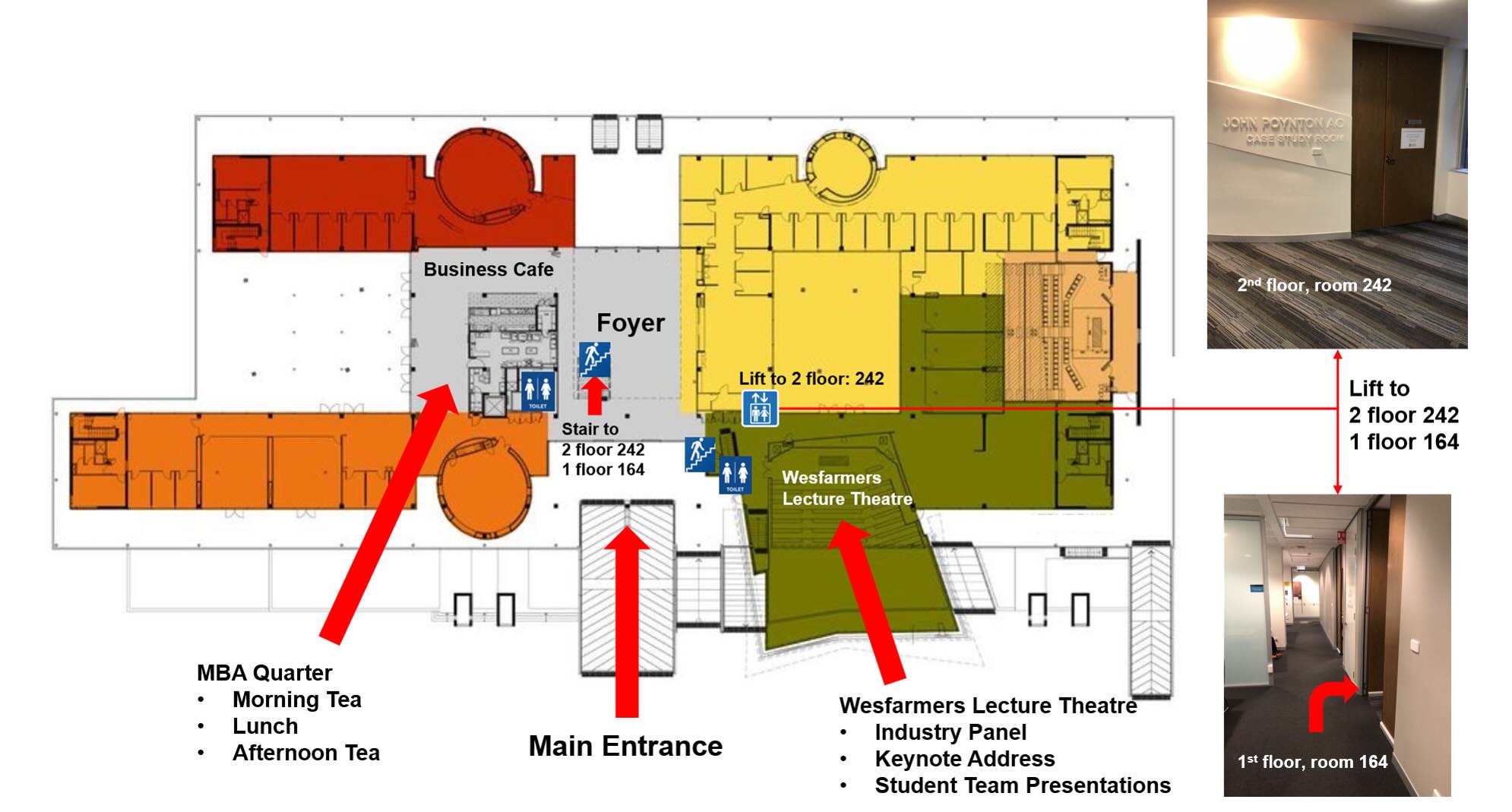
Conference Date: Friday, 16 October 2026
Venue: UWA Business School, The University of Western Australia - Crawley, Western Australia
Enquiries: shujie.luan@uwa.edu.au